


Crack Epidemic Victim. South Bronx. 1989.
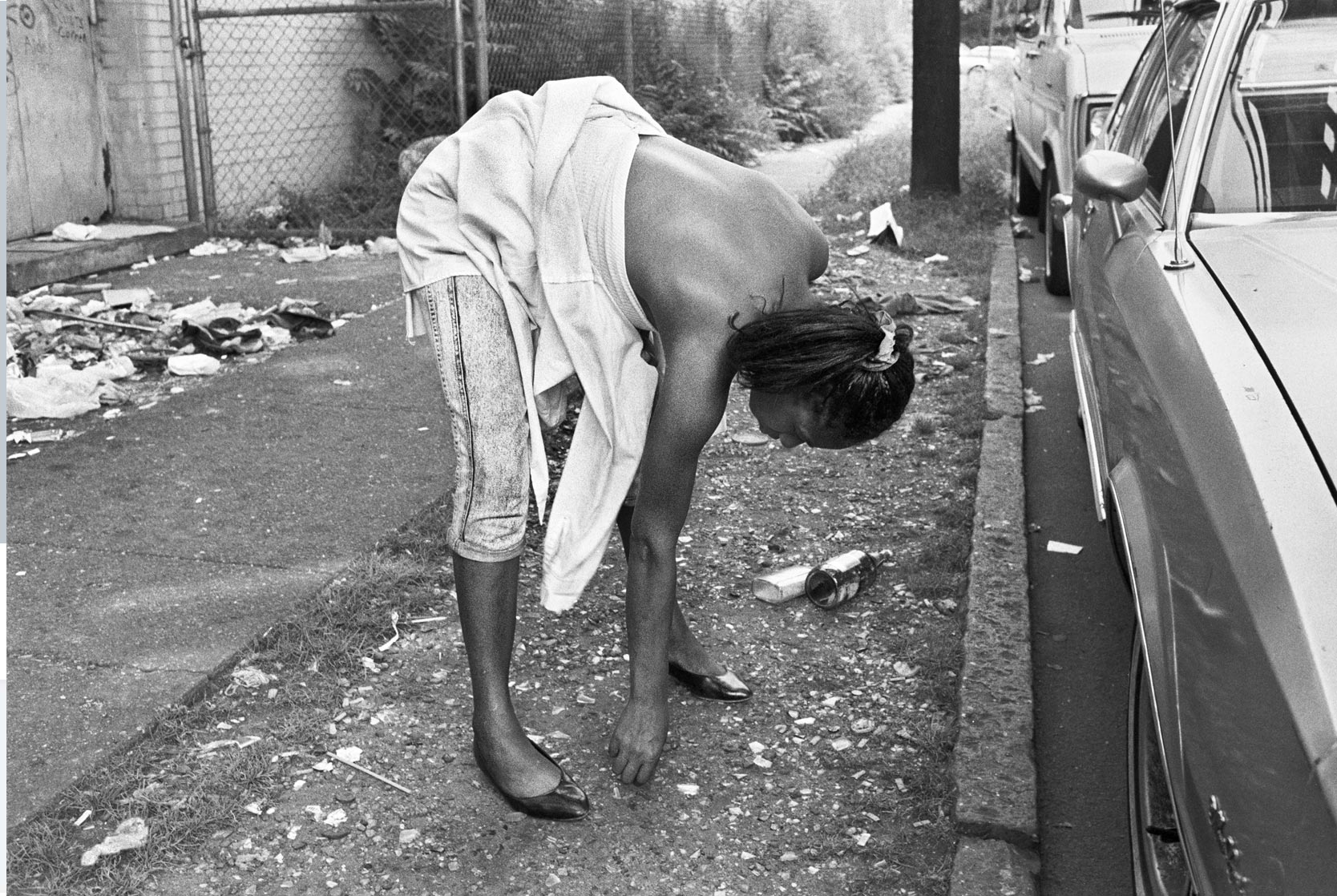
A woman scours a sidewalk strewn with broken glass and pebbles in the hopes of finding the magical rocks that had already devastated urban centers across America for almost a decade: Crack Cocaine. On this day, she walked the path of Lebanon Street and Park Avenue, a stone’s throw from the elevated trussles of the East 180th Street IRT train station.
The first thing that signaled the remarkable shift to loved ones of the victims was the slow but systematic disappearance of household items such as electronics, jewelry, or any other possession that could be flipped quickly in the street or pawn shop for cash to score another ‘hit.’ This, coupled with excessive weight loss due to a non-existent appetite and an uncontrollable anxiety, a side effect of Crack consumption and addiction, eventually made it impossible to ignore. Families either intervened successfully or were torn apart altogether as a result.
The Crack Cocaine pandemic cut through inner-city communities like a chainsaw through butter and left an army of Zombies where vibrant neighborhoods, already ravaged by the fire-for-hire insurance crime wave of the 70s and 80s, once flourished. Because of the money that the sale of Crack afforded dealers, and the resulting competition for the regional markets that could be delineated neighborhood-to-neighborhood, an unprecedented wave of violence emerged (read “battle grounds”).
This young woman was someone’s daughter, sister, friend or mother, and perhaps a productive member of society before taking a puff of the fumes produced by heating those so-called ‘magic rocks.’ While Crack Cocaine is mostly in the rear-view mirror of history, other more potent and deadly forms of recreational drugs have emerged to breach the void.
And, unfortunately, there will always be enough victims to fill the pipeline…
RELATED: “South Bronx Love Letter. 2016.”
